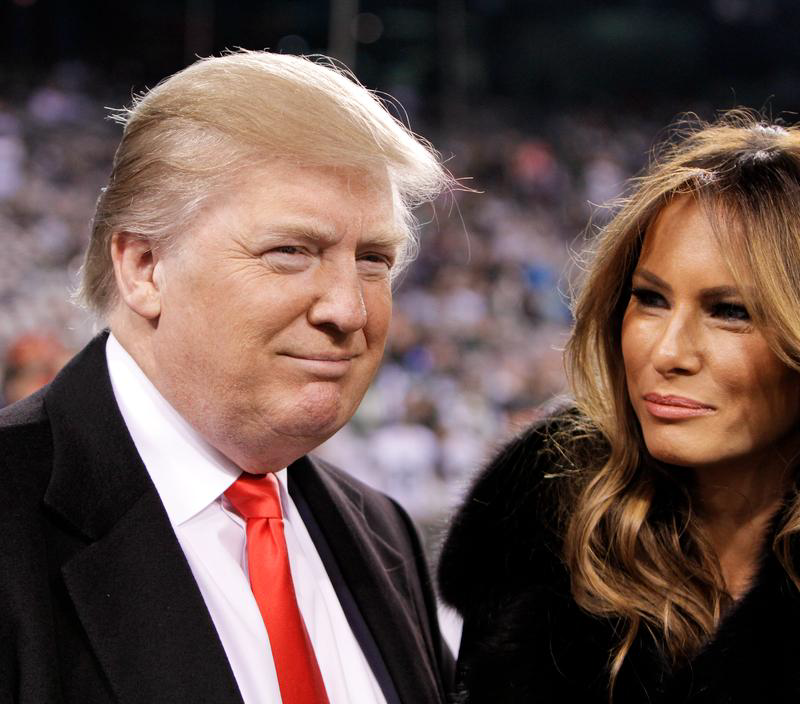
First Lady Melania Trump did not join President Donald Trump in Dallas on Wednesday, September 9, 2026, when the Republican National Committee (RNC) opened its first-ever midterm convention, and she is not on the program for the closing night on Thursday, September 10. The president delivered the keynote on the opening night at the American Airlines Center and is scheduled to speak again Thursday, when Vice President JD Vance headlines the second evening. A White House official had first confirmed the first lady’s plans on Thursday, September 3, to the Washington Examiner.
The RNC has promoted the gathering as a launchpad for the November 3 elections. RNC Chairman Joe Gruters said the program would walk Americans through the party’s agenda and what is at stake in November, with every hour carrying its own theme, message and voices. The committee counted 109 items and speakers planned across the two nights.
Dozens of Republicans Also Skipping
The first lady is far from alone in taking a pass. At least 45 GOP lawmakers told Politico they would not attend, out of roughly 70 Republican candidates and members interviewed. Their explanations ranged from prior commitments — a wedding, campus visits with teenage daughters, a dove hunt — to a conviction that their time is better spent campaigning at home. Others balked at the $25,000 entrance fee.
“I can’t control what the president’s going to say at the convention, but I can control where I’m at, what I’m doing,” Rep. Tom Barrett (R-Mich.) told the outlet.
Rep. Zach Nunn (R-Iowa) and Rep. Nick LaLota (R-N.Y.) each told Politico they would not be there, while Rep. Rob Bresnahan (R-Pa.) told Politico he was unsure whether he would go; The Hill reported on Wednesday, September 9, that Bresnahan is attending after all. All three are running for reelection. Sen. Susan Collins (R-Maine), Sen. Mike Rounds (R-S.D.), Sen. Dan Sullivan (R-Alaska), Sen. Tommy Tuberville (R-Ala.) and Sen. John Cornyn (R-Texas) are skipping as well. One House Republican dismissed the event to Politico as “a waste of time” and “a mess,” arguing that independent voters are neither attending nor watching.
House Speaker Mike Johnson has taken the opposite tack, saying he has been promoting the convention everywhere and that his colleagues must each make their own decision, while predicting that those who do come will have a great time.
Steep Price Tags and Bad Timing
Access to the president in Dallas carries a premium: a reported $88,600 for a photo opportunity and $250,000 for roundtable appearances, with Vance available for considerably less. The party has also charged as much as $20,000 for delegate status at the event, which has picked up the nickname “Trump-a-Palooza.”
The timing poses problems, too. The two evenings run up against the opening two games of the National Football League (NFL) season, and the convention closes Thursday, one day before the nation observes the 25th anniversary of the September 11 attacks. Originally booked for a single night, Trump put himself on both; a party official told Reuters that he wanted to set the tone for the entire convention.
On “Morning Joe,” MS NOW’s Jonathan Lemire had argued that the scheduling conflict would deprive Trump of the viewership he was after. Maggie Haberman of the New York Times concurred, noting that some in the president’s orbit privately acknowledge it was a mistake made because they had not been paying attention.
When the first-ever Republican midterm convention opened Wednesday night, the headline storyline became the crowd. The arena holds roughly 20,000 people, but as Trump spoke at about 8:15 p.m., the upper deck was mostly empty. Only about half the venue was filled when the convention opened, though more than 80 percent of seats were occupied by the time Trump’s speech began, and the problem worsened as his remarks ran well past their planned 45 minutes, with NBC’s Garrett Haake reporting past the 90-minute mark that plenty of attendees had left. Trump nonetheless insisted the arena was “packed,” claiming an equal number of people were standing outside, and the giant screen behind him glitched as he began, flashing rapid-fire clips of earlier speakers including Treasury Secretary Scott Bessent and UFC fighters Justin Gaethje and Bo Nickal. He wrapped up at 9:56 p.m. after a wide-ranging speech covering the economy, immigration, crime, healthcare, Venezuelan oil, voter ID laws, and the assassination of Charlie Kirk.
The biggest news was a promise of a $5,000 dividend for every American adult if Republicans hold both the House and Senate in November, money he said would have to be spent in the U.S., though he gave no details on how it would be distributed or tracked. He also urged supporters to “pretend that I’m running” and vowed to return to Texas to campaign for Senate candidate Ken Paxton.
The night’s surprise guest was a Democrat: Pennsylvania Sen. John Fetterman appeared via pre-recorded video to introduce fellow Pennsylvanian Sen. Dave McCormick and distance himself from socialism in his party, though he said afterward he’ll still caucus with Democrats.
A First Lady Rarely Seen
The first lady’s choice is consistent with how sparingly she has appeared in public since her husband’s second term began. One analysis tallied 38 days on which she had been seen publicly as of early August, a figure that rose to 40 by September 4. Her latest outing with the president was the Freedom 250 Grand Prix in Washington on August 23, after which the White House was reported to have cropped Natalie Harp, the president’s executive assistant, out of its own video of the couple at the race. She resurfaced on the convention’s opening day, September 9, speaking in the White House Rose Garden to the White House Historical Association’s Presidential Sites Summit about restoration and design projects in the executive residence.
Earlier, on August 20, she delivered remarks in the Rose Garden about the expansion of her Fostering the Future Initiative, marking the first time she had appeared with the president since the FIFA World Cup final in New Jersey on July 19. “I heard you missed me,” she joked to reporters. The first lady also skipped the rearranged White House Correspondents’ Dinner on July 24 and the July 28 funeral of the late Sen. Lindsey Graham of South Carolina, a close Trump ally.
Her reticence on the campaign trail is long established. Her only significant appearance in the 2024 race came on the closing night of the Republican National Convention in Milwaukee, days after Trump was struck in the right ear by a bullet in Butler, Pa. She also spoke at the 2016 convention, where she was accused of plagiarizing Michelle Obama’s 2008 address; her speechwriter later took the blame.
She has hardly been invisible in other respects. She starred in a $40 million Amazon documentary, held a surprise news conference denying any past association with the late sex offender Jeffrey Epstein and rebuked late-night host Jimmy Kimmel over an on-air remark about the president. She championed the bipartisan Take It Down Act targeting revenge porn and explicit deepfakes, and she opened back-channel talks with Russian President Vladimir Putin aimed at returning captured Ukrainian children. Marc Beckman, an adviser to the first lady, has called her the most consequential first lady in American history.
Trump arrived in Dallas with his approval rating at 33 percent in both a Reuters/Ipsos survey released September 2 and a Financial Times/Focaldata poll released September 6 — the lowest in each group’s polling — weighed down by the continuing war with Iran, an affordability crisis and a reignited trade fight with Canada. Democrats opted against holding a midterm convention of their own — and on neither night in Dallas is the first lady on the program.