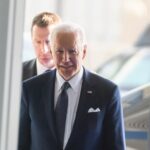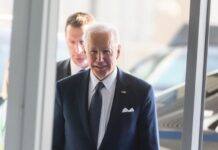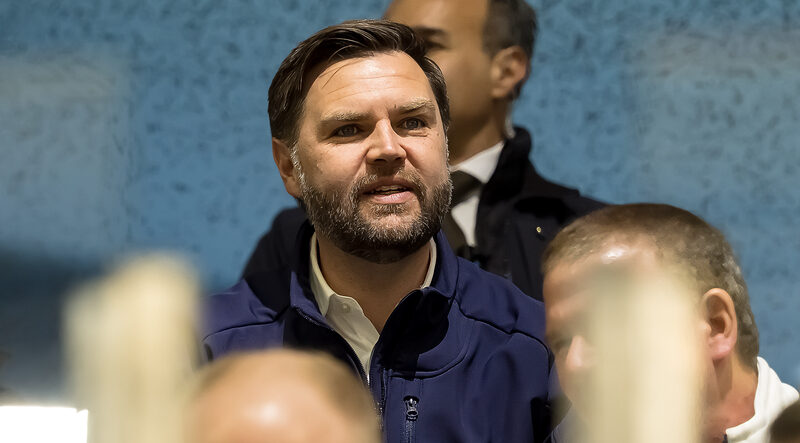
Vice President JD Vance told Michigan Democratic Senate nominee Abdul El-Sayed to leave Second Lady Usha Vance out of the campaign, unloading on the Democrat from a stage in suburban Detroit on August 31, 2026, and casting him as the embodiment of a rising evil in American life. El-Sayed is refusing to back down.
Universal Contracting Services and Urban Tree Trimming, a Sterling Heights business, hosted the campaign-style event, which was staged by MAGA Inc., the super PAC aligned with President Donald Trump. The company sits in southern Macomb County, at the heart of Michigan’s 10th Congressional District. Voters in Michigan find it odd when one man talks about another man’s wife, Vance told the crowd, before delivering the line that dominated the rest of the night.
“Whatever you want to talk about, Abdul, keep my wife’s name the hell out of your mouth because she’s way out of your league,” Vance said.
The Post That Set It Off
El-Sayed lit the fuse on August 22 with a post on X. Would Vance, he asked, be bringing Usha Vance along on a trip back in time to meet “Papaw,” the vice president’s grandfather, who is no longer living. Vance had used an August 21 rally in Ohio to invoke his late grandfather, “Papaw,” while attacking the Michigan Democratic Senate candidate over Sharia law.
Conservative commentators branded the post racist, their argument being that candidates’ spouses belong outside the campaign entirely. Journalist Emily Schrader called El-Sayed “a racist creep” over the Usha Vance post, according to reporting published September 6. Usha Vance, an Indian American Hindu, said the jab just made her laugh; her parents emigrated from India. She never got the chance to meet Mamaw and Papaw herself, she said in a “Fox & Friends” interview on Fox News, though she has come to know and love the family the two of them brought up. Whatever she had expected of Ohio, she added, was overturned by how welcoming she found the people there.
In an April 17 appearance on “The Allen Analysis Show” podcast, El-Sayed had also speculated about the couple’s marriage, suggesting the second lady is unhappy with her husband and predicting an awkward conversation ahead: that Vance will someday have to explain to his own children a career spent going after people who are different. Republican Senate candidate Mike Rogers used the rally to address Indian Americans throughout Michigan, telling them he was sorry their state has a Senate candidate without the decency to treat them respectfully, that the Republican Party is their home, and that the second lady is smart, poised and a role model for young people.
El-Sayed Turns the Charge Around
CNN anchor Kaitlan Collins asked El-Sayed whether spouses ought to be off limits. Politics, he said he would prefer, should exclude spouses altogether — but Trump, he then contended, had crossed that line first. Soon after he won the nomination, he recalled, the president put up an image on Truth Social that set the two couples side by side and drew attention to the hijab worn by El-Sayed’s wife, framing it as somehow less American. The post used El-Sayed’s full name and described two very different Americas.
That sequence adds up to hypocrisy, El-Sayed said: Trump throws the provocation, and Vance then behaves as though such an attack were unimaginable. His point about the second lady, he explained, concerned the philosophy the vice president holds to — one that ranks some people as more American than others. Why summon a grandfather dead for years to make a point about him at all, he asked, unless someone wanted to conjure a time when people like him were treated as less than normal?
The speech, which also railed against undocumented immigrants, painted El-Sayed as a politician who fights for one group at the expense of everyone else, with Vance warning that ethnic grievance eats away at the shared citizenship holding the country together. A definition of his own came back from El-Sayed in a statement: the true evil, he said, is taking health care from working people to pay for tax breaks for billionaires and pushing grocery and gas prices higher while flirting with trade wars. “Evil is dividing people for your own gain,” he said. Sock puppets out of Ohio and Florida are not worth taking lectures from, he added, and Michigan is better than that.
Critics Liken the Line to Will Smith
By September 6, the vice president’s admonition was being widely mocked online as an imitation of Will Smith’s on-stage slapping of Chris Rock at the Academy Awards in 2022. One X poster wrote: “JD brought up his own ‘Papaw.’ Abdul made one sarcastic reference to Usha, and Vance responded with a bargain-bin Will Smith impression while calling him ‘evil.’ That isn’t strength—it’s a thin-skinned little man performing outrage for applause.”
A Michigan Race With National Stakes
The March 12 attack on Temple Israel in West Bloomfield Township carried much of Vance’s case. Ayman Ghazali, a naturalized U.S. citizen from Lebanon, drove an explosives-laden vehicle into the West Bloomfield Township synagogue while more than 100 children were inside at the temple’s school. Fire broke out in the building, and Ghazali killed himself at the scene. In his first response, El-Sayed pointed to relatives the attacker had lost in an Israeli airstrike in Lebanon the week before and included a line about hurt people hurting others. He has since called that an error — the statement, he said, should have done nothing but condemn the attack — and on August 29 he apologized to Jewish Democrats. From the stage, Vance misphrased that line as “troubled people cause trouble.” The temple’s rabbi and some of its security guards were guests at the rally, Vance said, telling the crowd he did not know whether they were backstage or standing in the hall.
Other Republicans have gone after El-Sayed as well. Rep. Nancy Mace said that “every single Muslim holding public office in America” is “a threat to both national security and our republic,” and Sen. Tommy Tuberville called El-Sayed a “terrorist” — attacks that a column published September 7 cataloged alongside Vance’s.
El-Sayed’s position on Israel has divided Michigan Democrats, though the primary fissures had largely faded by the party’s state convention in Lansing on August 29. He faces Rogers on November 3, and a victory would make him the first Muslim U.S. senator. As of September 7, he and New York City Mayor Zohran Mamdani were among more than 255 Muslim elected officials serving across 26 states, according to the Council on American-Islamic Relations, a count that includes a historical high of four Muslim Americans in Congress.