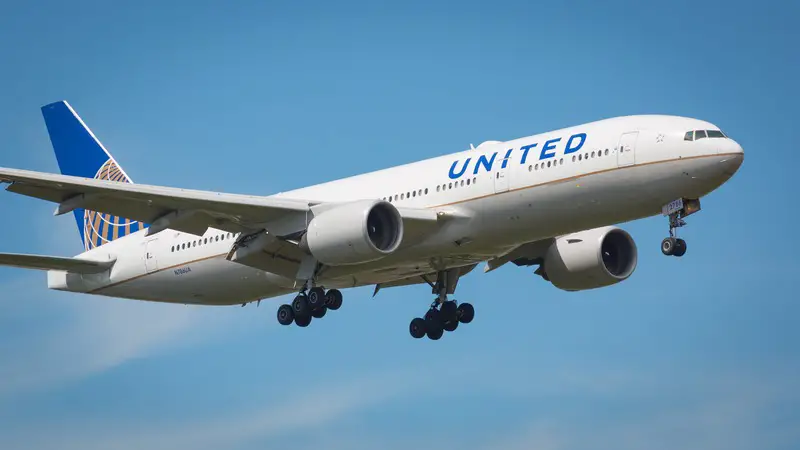
Traveling with his family, a 71-year-old man fell ill in the cabin of the Tokyo-to-Denver flight on Tuesday, Sept. 29, 2026, and died; he was a passenger on United Airlines. The Federal Aviation Administration confirmed that United flight 142 diverted to Seattle “after the crew reported a passenger medical emergency,” and flight logs show the diversion occurred while the aircraft was over the Pacific Ocean.
The King County Medical Examiner’s office identified the man as Felmo M. Penola, 71, in a list of decedents dated Sept. 30. The medical examiner ruled his death natural, caused by hypertensive and atherosclerotic cardiovascular disease, described as heart disease linked to high blood pressure and hardened, narrowed arteries.
What Passengers Saw Onboard
The emergency forced the Boeing 787-9 Dreamliner off its route and down in Seattle. The plane left Tokyo’s Narita International Airport for Denver carrying 245 passengers and 12 crew members, and the schedule called for a trip of about 10 and a half hours.
The man’s skin turned “deep purple” about six and a half hours into the journey, and he stopped responding, a witness said. A commotion near her seat woke one eyewitness, who told TMZ she was shocked to see an unconscious man lying on the floor; a flight attendant and three firefighters were assisting him. A flight attendant she approached told her the plane would make an emergency landing at the nearest airport, Seattle-Tacoma International, she said. The pilot stepped out of the cockpit at one point to assess the situation, she said, and one flight attendant was overheard telling another that the plane was 45 minutes from landing in Seattle.
The three firefighters were traveling as passengers. Oxygen through a mask and intravenous fluids were what they gave the man as the widebody turned toward Seattle and the jet descended.
The Diversion to Seattle
UA142 departed Tokyo Narita at 4:38 p.m. on Tuesday, Sept. 29, eight minutes behind its scheduled 4:30 p.m. departure, and landed in Seattle eight hours and 22 minutes later, with medical personnel meeting the aircraft as it arrived at 9 a.m. local time.
Paramedics met the aircraft. A Port of Seattle spokesperson said police and the fire department responded after the plane landed. The passenger was pronounced dead at the scene in Seattle after being assessed by the medical crew that met the aircraft. One of the firefighters hooked his arm through the man’s after it landed and pulled him down the aisle and off the plane, the witness told TMZ.
“Unfortunately, the person did not survive and was turned over [to] the King County Medical Examiner,” a spokesperson for the Port of Seattle, which runs Seattle-Tacoma International Airport, told People. The spokesperson also said: “Unfortunately, we do see this a couple of times a year from long-haul flights. SEA is the closest major airport on flights over the Pacific and we become the diversion point for inbounds to the U.S.”
The jet was on the ground in Seattle for just over two hours before being cleared to continue, departing Seattle at 11:10 a.m. on Sept. 29 for Denver. United confirmed the diversion and said medical personnel met the aircraft, but the carrier released no further details about the passenger.
Emergencies in the Air
The Centers for Disease Control and Prevention puts medical emergencies at about 1 of every 604 commercial flights, with about 0.3 percent of them ending in death. Roughly 90 percent of flights with an emergency still reach their destination, the CDC says. Cardiac events, chest pain, obstetric complications and possible strokes account for most of the diversions. University of Virginia researchers wrote in a 2015 review in the New England Journal of Medicine that cardiac arrest accounts for only 0.3 percent of in-flight medical events but 86 percent of the deaths.
A 2001 FAA rule requires U.S. airlines to carry an automated external defibrillator and flight attendants to be trained in CPR and defibrillator use. Planes also carry an emergency medical kit stocked with drugs such as epinephrine and aspirin, along with oxygen equipment. Airlines consult ground-based medical services to help decide whether a flight should divert, though the pilot makes the final call, the CDC says. Medical professionals who volunteer to help in good faith are shielded from liability by the 1998 Aviation Medical Assistance Act, except in cases of gross negligence or willful misconduct.
Rules for what medical kits must hold are under review. The FAA, in an Aug. 5 proposal, would swap the current list of 64 required items for a performance-based standard and require airlines to equip kits for nine life-threatening conditions, including cardiac emergencies, breathing emergencies, sudden loss of consciousness and opioid overdose. Defibrillator requirements are left unchanged by the proposal, and public comments are due Oct. 5.