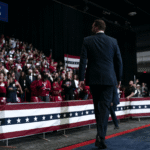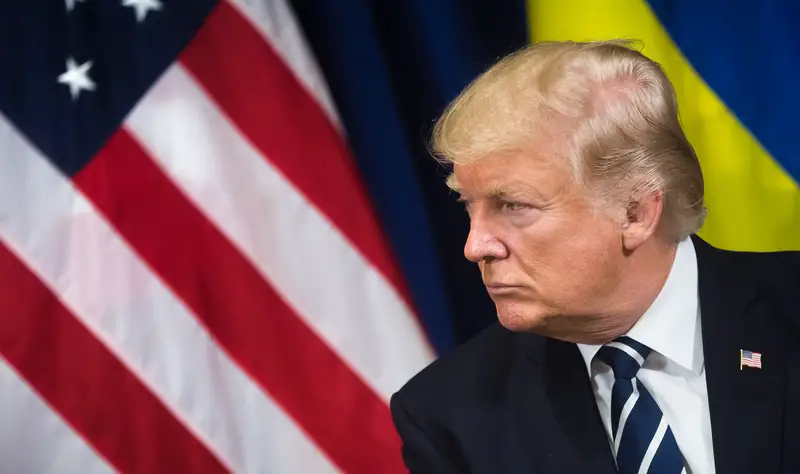
Asked whether Washington should panic about an Iranian dirty bomb aimed at his top officials, President Donald Trump answered with a threat and a promise.
Trump, 80, gave that answer in a live Fox News interview from Shenzhen, China, on Wednesday, Nov. 18, 2026, hours before his three-way meeting with Chinese President Xi Jinping and Russian President Vladimir Putin. Fox News senior White House correspondent Jacqui Heinrich asked him about U.S. intelligence indicating that Iran is developing plans to target senior members of his administration with a dirty bomb or a chemical weapon in Washington, D.C.
Heinrich asked whether people in D.C. should be worried, noting that several members of the administration have been living on military bases because of a generally increased threat environment.
“I don’t think so, no. I mean, look: If it does happen, we wipe them out,” Trump replied. “That’s a promise?” Heinrich asked. “Oh, I give you my word. Absolutely,” he said.
From Nuclear to Gases and Bio
Trump also described what the United States is picking up from Tehran. “There’s indication that Iran is looking at gases, looking at bio, because we’ve shut them out with the nuclear,” he said, adding that the nuclear path is much harder for Iran.
On Tuesday, Nov. 17, he had warned of unprecedented retaliation if Iran attacked Washington and said the administration was taking the matter seriously.
The U.S. war on Iran began Feb. 28, 2026. Nine months in, diplomatic talks have stalled, despite Trump’s claims at the outset that the conflict would last only weeks. Efforts to end the fighting and reopen the Strait of Hormuz have yet to produce an agreement.
Plotting That Includes Locations and Targets
The plotting picked up by the United States has been very specific and includes locations and targets, two sources said, and it has set off a flurry of contingency planning. Sources familiar with the intelligence characterized the Iranian planning as an effort to give Tehran options for now, rather than an indicator of an imminent attack. Officials held several meetings in the week before the intelligence surfaced publicly Monday, Nov. 16, to discuss how to counter the threat.
White House spokesperson Lauren Bis said the U.S. is “monitoring any and all potential threats, but at this time there are no credible threats to the homeland.” Homeland Security Secretary Markwayne Mullin called Iran’s planning “aspirational” and said it did not amount to a new threat. American officials view the same intelligence as a signal of an alarming willingness by Iran to escalate as it absorbs U.S. military strikes and an economic blockade that top officials have called devastating.
A dirty bomb packages radioactive material inside a conventional explosive. It does not rely on nuclear fission, and casualties would likely come from the blast rather than the radiation, though contamination could affect surrounding areas. Such devices are relatively easy to assemble, and officials cautioned that the United States is incredibly vulnerable to an attack with unconventional weapons.
Iran would not need to smuggle trained operatives into the country. It would need only to convince someone already living inside the United States to carry out the attack. U.S. intelligence has also picked up Iranian chatter claiming that bomb-making materials are stashed inside the country, and officials are divided over how credible that reporting is.
Bessent Moved Into Military Housing
The Secret Service moved Treasury Secretary Scott Bessent into military housing in the week before the intelligence became public. Other Trump officials have relocated as well, among them White House Chief of Staff Stephen Miller, Defense Secretary Pete Hegseth and Secretary of State Marco Rubio.
Iranian plotting against current and former U.S. officials has run since Trump’s first administration, including a murder-for-hire plot against him in 2024, and has largely concentrated on killing officials traveling overseas. Separate intelligence suggested Iran might use chemical weapons against American troops in the Middle East. Several officials said those troops lacked adequate protective equipment or training, and parallel preparations were made to equip and train U.S. diplomatic and intelligence personnel in the region.
Officials face another complication: Section 702 of the Foreign Intelligence Surveillance Act expired in June, though surveillance orders approved before then remain valid until March 2027. Attorney General Todd Blanche, Director of National Intelligence Jay Clayton and CIA Director John Ratcliffe urged congressional leaders in a letter to renew it.
A spokesperson for Iran’s U.N. mission in New York rejected the allegations, saying the country considers the use of chemical weapons illegitimate under any circumstances. The statement did not explicitly address the intelligence about a possible dirty bomb.
Trump met Xi and Putin on Nov. 19, and the three leaders issued a joint peace declaration after the trilateral summit.
There is no evidence Tehran has decided to move forward with an attack inside U.S. territory. Iran’s capability to launch one has not grown, one source said. What has changed is the incentive.