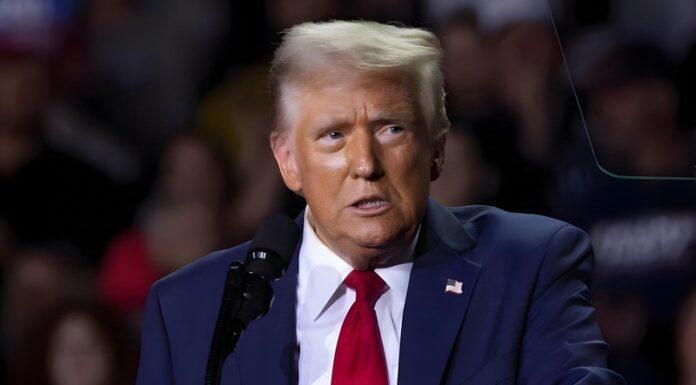
President Donald Trump has been privately wrestling with questions of mortality following the death of South Carolina Sen. Lindsey Graham, according to a recent report. The passing of the 71-year-old lawmaker on July 11, 2026, sent the 80-year-old commander-in-chief into an uncharacteristic period of introspection, with sources saying he has been discussing the subject with close confidants.
Graham died from natural causes related to an aortic dissection, which is a tear in the body’s largest blood vessel extending from the heart. Just one day before his death, on July 10, the senator had met with Ukrainian President Volodymyr Zelenskyy in Kyiv. He returned to his Capitol Hill home after the overseas trip, showing no outward signs of medical trouble.
During a July 12 interview on NBC’s “Meet the Press,” Trump described Graham as “like a member of the family” and called him “a tough one to lose.” The president also revealed that Graham had telephoned him around 7 p.m. following the Ukraine visit to talk about the Safeguard American Voter Eligibility (SAVE America) Act. Trump said the senator seemed fatigued but otherwise fine, a natural state after a long flight. They discussed plans to reconnect in the near future.
Final Conversation and Sudden Collapse
Trump told NBC anchor Kristen Welker that the exchange could have been the final call Graham made. Emergency medical personnel were dispatched to the senator’s residence Saturday night, July 11, following cardiac arrest. Graham had turned 71 just two days earlier and was scheduled to appear on “Meet the Press” on Sunday, July 12
Behind closed doors, the president has reportedly questioned whether Graham’s demanding travel itinerary might have taxed the otherwise energetic 71-year-old. According to insiders, Trump has also delved into the senator’s family medical background, trying to understand how someone appearing healthy could die so rapidly and unexpectedly.
Health Concerns and Public Image
Trump has repeatedly maintained that he possesses the cognitive and physical capacity required for his position. He often highlights having “aced” three dementia screening tests, presenting the outcomes as evidence of superior mental ability. The White House has not clarified why multiple such assessments were necessary.
Nevertheless, observable medical concerns have surfaced during his current administration. Dark markings have shown up on his hands, occasionally hidden with cosmetics, and his swollen ankles plus instances of public drowsiness have drawn scrutiny.
The president marked his 80th birthday on June 14 with ambivalence, indicating the occasion was not one he embraced. He has also addressed uncertainty about his eternal fate, telling an audience in Georgia during February that while he aspired to reach heaven, he harbored reservations.
From Critic to Confidant
Graham had represented South Carolina in the Senate since 2003 and mounted a bid for the 2016 Republican presidential nomination, during which he ranked among Trump’s harshest detractors within the GOP before exiting the race. He subsequently transformed into one of the president’s staunchest supporters and a regular golf companion. Vice President JD Vance honored him as a legislator who battled vigorously for his principles, noting that Graham possessed the finest sense of humor in the Senate.
Trump directed flags to be lowered to half-staff until 6 p.m. on July 18 as a tribute to Graham. Sen. Tim Scott, South Carolina’s other Republican senator, described the death as evidence that life is ephemeral.
The reflection on mortality comes after Trump himself survived three assassination attempts. In July 2024, a shooter’s bullet grazed him at a Butler, Pa., rally, an attack that killed attendee Corey Comperatore. That September, Ryan Routh was arrested with a rifle near Trump International Golf Club in West Palm Beach, Fla.; he was convicted of attempted assassination and sentenced to life in prison in February 2026. Another gunman attempted to assassinate the president at the White House Correspondents’ Association dinner in April 2026. Following the Butler and correspondents’ dinner attacks, his immediate public response emphasized unity.
Political analyst David Rothkopf, appearing on “The Daily Beast podcast,” contended that Trump’s focus on naming buildings and erecting monuments reflects anxiety about his historical legacy, characterizing the president as someone who feels death approaching. Regardless of whether that interpretation is accurate, Trump’s mourning style has shown consistency. When eulogizing figures he respected — individuals such as activist Charlie Kirk and his former spouse Ivana Trump — his words appear genuine. For adversaries like Hollywood figure Rob Reiner and ex-FBI chief Robert Mueller, his comments become harsh.
With Graham nine years younger than Trump, the senator’s abrupt death from a condition that gave no advance warning appears to have forced the president into a rare period of contemplation about his own advancing age and limited time remaining.