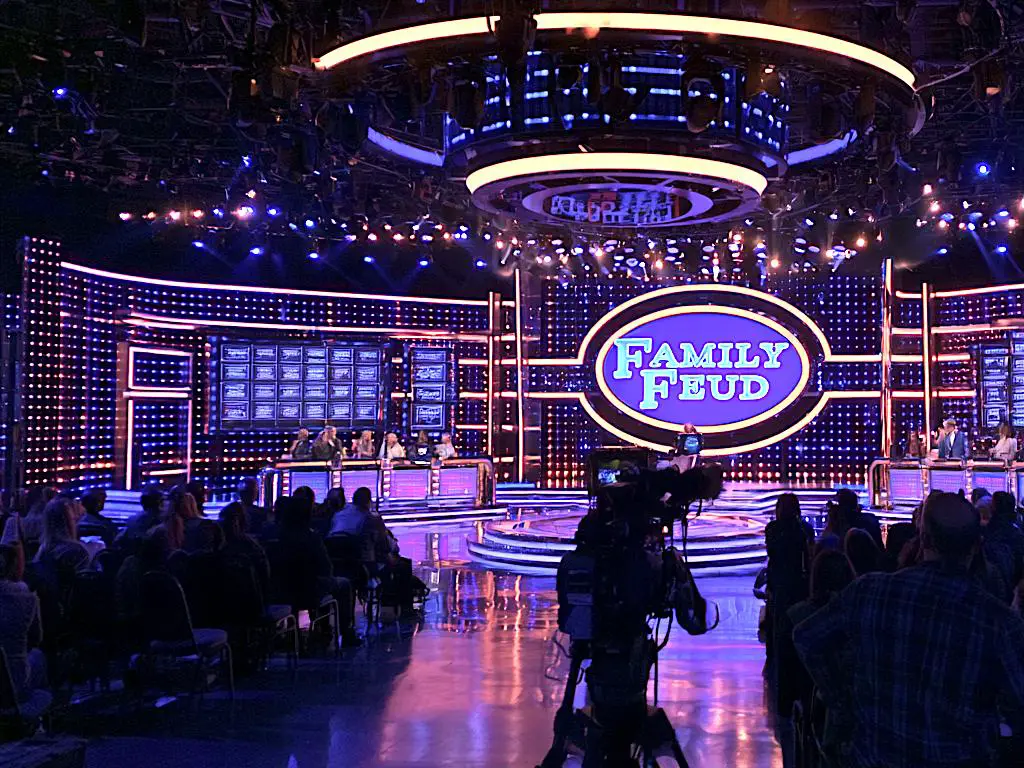
A moment on the syndicated game show revealed more than anyone intended. By May 2023, comedian Steve Harvey had spent 13 years presiding over “Family Feud,” building his reputation on a predictable routine: feign astonishment at suggestive responses, act scandalized by innuendo the program itself invites, and lean into manufactured shock for audience approval. This tried-and-tested approach generated laughs for over a decade. Then came an incident that exposed the arrangement’s contradictions—a contestant named Tracy delivered an answer Harvey publicly reprimanded, only for the game board to validate her guess immediately afterward. Fans who watched the clip on Instagram weren’t amused.
Tracy faced a survey question: what do people still hold when drifting off to sleep? Her reply—delivered with visible hesitation—was “themselves.” Harvey pounced. He drew attention to the show’s name emblazoned on his card, stressed the word “Family,” and reminded her that viewers watch during daytime hours. The scolding was swift and public.
The Board Reveals the Truth
What happened next dismantled Harvey’s entire performance. The board lit up with Tracy’s response, categorized as “appendage.” The survey had captured precisely the interpretation she offered. Harvey, visibly thrown, questioned what the term even signified. A host who moments earlier had rebuked a player for crossing propriety lines now stood facing evidence that her response belonged on the list all along. His retreat was immediate and instructive.
The significance lies not in one faulty judgment but in what it revealed about the show’s operation. The program thrives on deliberate ambiguity. Questions are engineered to summon exactly the kind of replies that allow Harvey to deploy his trademark bewilderment. Pose a query about what adults grip while falling asleep, and a substantial portion won’t immediately think of stuffed animals. This outcome isn’t incidental—it’s structural. The suggestive content is the commodity; Harvey’s astonishment is merely branding.
The formula succeeded for years because viewers understood the unspoken agreement. Earlier broadcasts featured NSFW responses that prompted Harvey to halt filming, generating gasps and viral moments audiences celebrated because everyone recognized the performance. Contestants risked bold guesses, crowds reacted, and Harvey played to the camera. The indignation was staged, and staged performances depend on audiences who grasp the artifice.
Breaking the Implicit Agreement
Tracy’s segment violated that understanding, and commenters beneath the Instagram post articulated the violation with precision. Their objections targeted not the innuendo itself but the inconsistency of a host who profits from provocative content while chastising those who engage with it. “The questions leave little to no room for kid friendly thoughts,” one viewer noted. Another wrote, “U ask this types of question n still say it’s FAMILY feud.” A third demanded, “Then why do you form the questions like that!?” Collectively, these responses form a unified argument: you cannot engineer ambiguity and then penalize those who acknowledge it.
A power imbalance pervades the exchange, one commenters appeared to recognize instinctively. Harvey controls the environment completely. Contestants enter without preparation, attempting to predict survey results from strangers, exposed before cameras and live audiences. When Harvey registers comic surprise at a clever response, the humor is collaborative. When he publicly shames a visibly anxious contestant for an answer the game itself deemed correct, the dynamic tilts toward cruelty—a powerful figure leveraging his position to humiliate someone vulnerable, while being demonstrably wrong.
The incident’s gravity shouldn’t be overstated. This was a minor television mishap; production continued without interruption. Yet the episode serves as a revealing case study because it isolates a contradiction daytime programming typically conceals. The genre operates on scripted spontaneity—responses that appear authentic but are structurally predetermined. When the machinery becomes visible, as it did here, audiences confront the apparatus directly. Once the construction is apparent, the entertainment becomes harder to accept uncritically.
Manufactured Outrage as Strategy
The central contradiction is Harvey’s perpetual astonishment itself, which has never been credible. No one can moderate a program constructed around provocative survey prompts for over a decade and remain genuinely scandalized by the responses. The shock is performance, and viewers have implicitly accepted it as such. But performance only functions when it maintains internal consistency. Problems emerge when the performer weaponizes false innocence—when pretended moral offense becomes a tool for diminishing someone publicly. At that juncture, audiences are asked to laugh at the contestant rather than with the host, and a significant portion refused.
The speed and substance of viewer criticism merits attention, suggesting evolving expectations for these broadcasts. As of May 2023, the program had leaned heavily into suggestive territory, demonstrating that innuendo was fundamental rather than accidental. Audiences had accommodated that reality. What they proved less willing to accept was a host who exploits the format’s provocations while performing disapproval—and who directs that performance toward contestants rather than the questions generating the responses.
Though minor, the controversy points toward broader changes in how audiences interpret authority and accountability in entertainment. The traditional model positioned hosts as untouchable arbiters whose reactions shaped perception. Instagram commenters rejected that framework entirely, insisting that those who construct the game bear responsibility for its consequences. They refused to permit Harvey the stance of shocked observer when he functions as the performance’s center. Though expressed through social media’s informal language, this constitutes genuine resistance: contemporary audiences challenge back, and they document everything.
Harvey’s professional longevity has been substantial, and the show’s approach had survived many moments by 2023. But the episode offers a precise lesson about the economics of performed innocence. A career can be built on theatrical shock. That shock can generate laughter, and laughter can sustain success. What proves unsustainable is directing that performance at someone in a subordinate position while expecting continued audience support. When Harvey pointed at the word “Family,” he wasn’t upholding any genuine standard. He was invoking principles his own show systematically undermines for profit—and the board, unmoved by his act, simply displayed the facts.