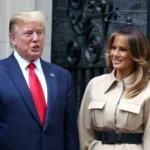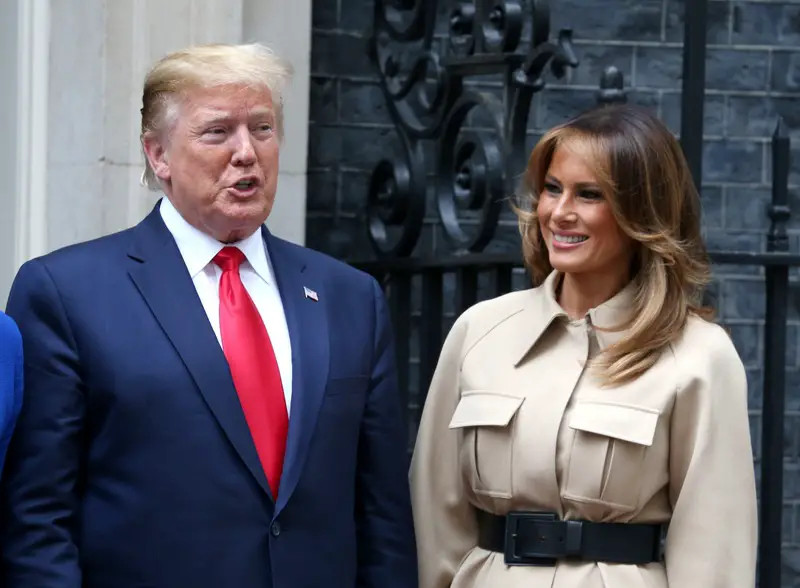
First Lady Melania Trump appeared on the sidelines of the United Nations General Assembly in New York on Tuesday, September 22, 2026, at an event pitched as a discussion of children, education and technology — and did something the West Wing would not. Her office cleared press credentials for CNN and Politico, two outlets President Donald Trump has barred from the White House.
She signed off on that access knowing about the restrictions in place at the White House, according to reporting on the arrangement. The result was a first lady’s program operating as a room where reporters locked out of her husband’s press operation could work freely.
The centerpiece was Fostering the Future Together, the international coalition she started in 2025 to advance children’s well-being through education, technology and innovation, and which counts 57 participating countries. She used the appearance to push for guardrails on artificial intelligence (AI), arguing that children’s access to AI tools has to come paired with the ability to use them responsibly — a more cautious note than her husband strikes on the technology.
A Policy Platform of Her Own
The coalition has pulled in private industry alongside governments. The White House says it has built partnerships with Amazon, Google, Intel, Adobe, Starlink and Zoom, and lists AI in education, digital literacy and online safety among its focus areas. Its March summit drew representatives from 45 countries and technology firms.
The domestic side of the agenda has moved on a parallel track. Fostering the Future Accounts, a savings-and-investment program meant to help young people aging out of foster care build financial independence, followed in June; 23 governors have committed to setting up the accounts in their states, according to the White House.
A Sparse Public Calendar
That policy output has been delivered on an unusually thin schedule. An analysis published in early August counted 38 public appearances by Melania Trump in 2026, an average of one every six days. Before that, she had gone more than a month out of public view, missing the White House Correspondents’ Dinner and the funeral of Sen. Lindsey Graham. After the scrutiny, she resurfaced on August 20 at a Rose Garden event alongside President Trump to promote the Fostering the Future initiative, then turned up on August 23 at the Freedom 250 Grand Prix in Washington — her last public outing before the New York trip.
She has been just as selective about her husband’s political calendar. Days before the Republican midterm convention in Dallas on September 9-10, a White House official confirmed she had no plans to attend. The duties she does take on tend to attach to the office rather than the party.
A Role With No Fixed Script
There is no job description to violate. Martha Washington, who took on the role in 1789, was cast as a hostess-in-chief. Eleanor Roosevelt turned it into a platform for advocacy in the New Deal era, speaking out on civil and women’s rights, labor and poverty. Jackie Kennedy professionalized the role, leading the White House restoration project and guiding a televised tour of the building in 1962. Hillary Clinton carried the office into legislative combat with the failed 1993 push for the Health Security Act. Michelle Obama built her tenure around military families, healthy eating and higher education through the Reach Higher and Let Girls Learn initiatives, and released the documentary “Becoming” in 2020.
Melania Trump, a Slovenian-American former fashion model born Melanija Knavs, has adopted none of those templates whole. “She’s been unique among modern first ladies,” said Tammy Vigil, who holds an associate professorship in communications at Boston University and wrote a book about Michelle Obama and Melania Trump.
The pattern is long established. After her husband’s 2016 victory she stayed in New York with their son, Barron Trump, rather than move into the White House. She attended the Republican National Convention in July 2024 in a bright red Christian Dior suit but gave no speech, another break with tradition, and her scarcity during that campaign prompted a run of “Where is Melania?” articles. Her memoir declared a pro-choice position that put her at odds with anti-abortion activists in her husband’s party. Her first term produced the uproar over the “I really don’t care, do you?” jacket. Stephanie Grisham, her former press secretary, wrote that the first lady declined to issue a statement condemning the violence of the January 6, 2021, Capitol riot, and Grisham resigned; Melania Trump has said she was not aware of what was unfolding.
When she does speak, the words are measured. A day after her husband’s 2024 election night win, she addressed the country in a brief social media message, vowing, “We will safeguard the heart of the republic – freedom.” Otherwise her public work stays tightly bounded: children, technology and foster care. Amazon’s documentary “Melania,” which covers the 20 days before the January 2025 inauguration, brought her to a promotional appearance in New York on January 28, 2026.
The coalition’s next phase points outward rather than toward Washington. Regional meetings are planned around the G20 in Miami and the ASEAN conference in the Philippines, along with sessions in Europe and the Caribbean — a platform that runs through first spouses, foreign governments and technology companies rather than through her husband’s political machinery.