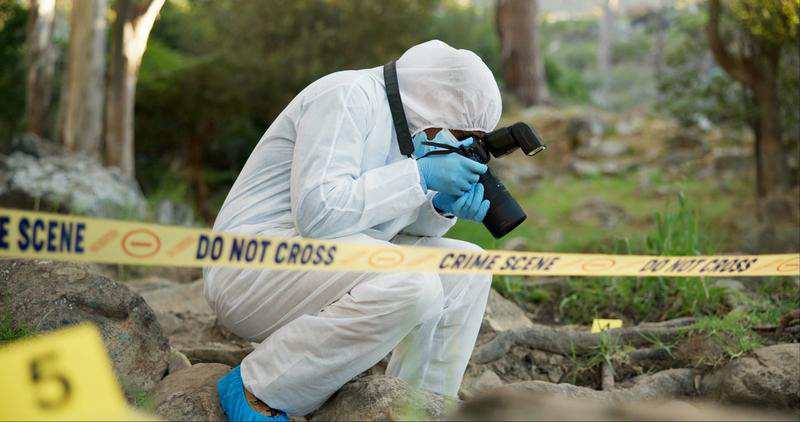
A forensic excavation team has unearthed 22 additional infant bodies at a former Irish care facility in Tuam, County Galway, announced July 22, raising the total recovered since digging commenced in July 2025 to 99. The site may hold as many as 800 children in unmarked graves.
Investigators found the latest remains inside coffins at the perimeter of the notorious former Bon Secours Mother and Baby Home, in an area historical records label a “burial ground.”
“To find such a high number this early in the excavation of this space specifically indicates to us there are more in the area,” said Dr. Niamh McCullagh, ODAIT’s (The Office of the Director of Authorised Intervention Taum) consultant forensic archaeologist.
The dense cluster of infant bodies in such a confined zone has persuaded the excavation team that many more corpses remain buried below.
Decades of Silence Broken by Two Boys
The grim secret first emerged in the 1970s when two boys, Franny Hopkins and his friend Barry Sweeney, fled an orchard owner after stealing apples and scaled the stone wall enclosing the abandoned institution. Their feet hit the earth with a hollow thud. Clearing away brush and prying up a concrete slab, they peered inside.
“There was just a jumble of bones,” Hopkins recalled.
The boys had stumbled upon a mass unmarked grave inside a disused septic tank, situated in a town whose name derives from the Irish word for burial place. Yet for 40 years, their discovery stayed mostly hidden beyond the crumbling walls.
Catherine Corless, a homemaker with an interest in local history, eventually exposed the full scale of the tragedy. When she began researching material for the local historical society, she started investigating what happened to children who died at the home. No cemetery plot could be found for the infants who perished there.
“I thought I was doing a nice story about orphans and all that, and the more I dug, the worse it was getting,” she said.
Her investigation ultimately revealed evidence pointing toward the remains of nearly 800 infants and young children.
Forensic Analysis Offers Hope for Families
Recovered bodies are taken to a purpose-built mortuary and laboratory in Toghermore, Tuam, where specialists clean, dry and examine them. ODAIT uses radiology and 3D scanning technology to establish details about the children’s circumstances of death, including age and sex. ODAIT reports that this forensic data may help narrow down potential matches and connect skeletal remains to specific identities. Historical documentation shows that on average two infants died each month at the facility, with many fatalities resulting from malnutrition and diseases that were treatable even during that era. McCullagh noted that the find goes beyond mere statistics — the suspected burial site and tightly concentrated remains carry profound importance, and investigators expect to uncover more bodies.
Institutions Born From Stigma
Mother and baby homes across Ireland launched during the 1920s, following the nation’s independence from Britain, with most operated by Catholic nuns. The Tuam facility originated in a former workhouse constructed during the 1840s to serve the destitute, a building where numerous famine victims had perished. During the Irish Civil War of 1922-23, Free State troops occupied these structures, and in 1923 six anti-treaty Irish Republican Army members were executed on the premises. In 1925, the gray three-story structure was converted into a facility for unwed pregnant women and orphans, run for County Galway by the Bon Secours Sisters.
Living conditions were harsh. Heating was inadequate, and plumbing was present solely in the kitchen and maternity sections. Crowded communal dormitories accommodated up to 200 children and 100 mothers simultaneously.
Women rejected by their families were essentially held captive, performing work for up to a year before being expelled, with most being separated from their children forever. The disgrace associated with unwed pregnancy was so severe that many women entered in secret. Peter Mulryan, who grew up in the home, learned only decades later that his mother had been in her sixth month of pregnancy when she was transported by bicycle from her home under cover of darkness.
There was no accountability for the men who fathered the children, whether through romantic encounter, rape or incest. Children from the home were shunned at school.
Today the Tuam grave has forced a reckoning reaching the highest levels of government in Dublin and the Vatican, as Ireland and the Catholic Church confront a legacy of ostracizing unmarried women and tearing them from their children. For relatives whose family histories are bound up with the site, each recovered body is a step toward answers long denied.