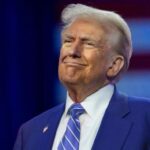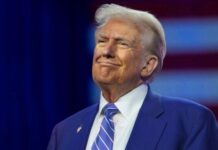
In an interview released on Aug. 7, 2026, with Punchbowl News co-founder Jake Sherman, President Donald Trump added the Michigan 2024 U.S. Senate contest to his expanding catalog of elections he maintains were stolen, declaring without evidence that former Rep. Mike Rogers was cheated out of his race against then-Rep. Elissa Slotkin.
“I happen to think he won,” Trump said, adding that in his view Rogers was denied a legitimate win.
The assertion follows years of unsubstantiated fraud allegations from the president, stretching back to his widely debunked insistence that Democrats manipulated the 2020 presidential contest against him. Trump has floated seeking a third White House term in 2028 as restitution for what he calls the “rigged” 2020 proceedings.
Sagging Numbers and a Familiar Deflection
The comments surface as the president confronts a 39% approval rating in the July 17-20 Fox News survey, with discontent now spreading to working-class voters without college degrees — the bedrock of his 2024 re-election coalition. Those voters have joined their college-educated peers in expressing disapproval of his performance, creating political headwinds ahead of the 2026 midterms.
When Sherman raised Trump’s endorsement track record and mentioned that Rogers, a Republican from Michigan who has received Trump’s support for his 2026 bid, fell short in his 2024 bid, the president refused to concede the loss. Instead, he pivoted to conspiracy, maintaining the race had been manipulated against his pick.
When questioned about the dismal numbers, Trump offered that he was unsure what explained the drop, proposing that public frustration was directed at the GOP broadly rather than at his own presidency. The dodge stood out as an attempt to distance his personal brand from the broader Republican Party at a time when both face voter skepticism.
A Familiar Playbook on Losing Races
Rogers was defeated by Slotkin in the 2024 Senate race by around 19,000 votes. No evidence supports Trump’s fraud allegation, yet the claim mirrors a pattern established over years of attributing Republican defeats to cheating rather than voter preference.
During the exchange, Sherman highlighted the loss, but Trump held firm, maintaining that fraud had occurred and describing Rogers as a strong contender who polled favorably.
Rogers Eyes a Rematch With a New Opponent
Rogers is campaigning again, this time confronting a substantially different rival on the Democratic side for 2026. Abdulrahman Mohamed El-Sayed, known as Abdul El-Sayed, secured his party’s nomination in the Aug. 4 primary by prevailing over Rep. Haley Stevens, a Democrat aligned with Michigan’s establishment wing. El-Sayed campaigns from the progressive left.
During the Punchbowl News interview, Trump mocked El-Sayed’s name in a manner the candidate and others have characterized as a deliberate attempt to exploit his Muslim identity. According to El-Sayed, rivals such as Rogers seem to deploy his full name as a coded racial appeal.
Referring to the candidate as “Abdullah,” Trump contended that Rogers performs more strongly in surveys when matched with El-Sayed than he did facing Stevens. Trump did not address El-Sayed’s concerns about the nature of that framing.
Stakes Rise for Michigan’s 2026 Senate Seat
Michigan is emerging as one of the most competitive Senate battles in the 2026 midterm cycle. The president’s choice to re-endorse Rogers — while simultaneously recasting the 2024 loss as fraud rather than a legitimate defeat — underscores how much weight Trump is placing on flipping the seat this time around.
To prevail, Rogers must exceed his performance from 2024 by a significant degree, a task complicated by the fact that his presidential backer currently commands only 39% public approval. Those circumstances create distinct obstacles, irrespective of Trump’s version of events from the prior cycle. The contest’s result may hinge on whether Michigan voters respond more to Trump’s backing or to the prevailing political climate.